E85 vs E20 Mileage Test Sparks Huge Online Debate
A viral mileage comparison post between E85 and E20 fuel blends has triggered massive discussions among bike owners and automobile enthusiasts across India.
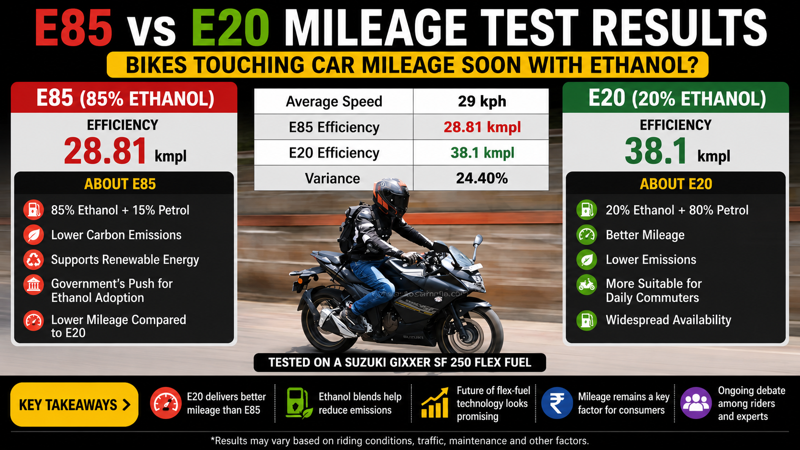
The image, showing a mileage test performed on a Suzuki Gixxer SF 250 Flex Fuel motorcycle, quickly spread across:
- X (Twitter)
- automobile forums
- bike enthusiast communities
- fuel policy discussions
The post focused on how different ethanol fuel blends impact mileage and fuel efficiency.
What the Viral Mileage Test Showed
According to the viral image:
- Average speed during testing was 29 kmph
- E85 fuel efficiency was recorded at 28.81 kmpl
- E20 fuel efficiency reached 38.1 kmpl
- The variance was shown as 24.40%
The test reportedly used:
- Suzuki Gixxer SF 250 Flex Fuel motorcycle
The large mileage gap immediately caught the attention of riders online.
What Are E20 and E85 Fuels?
Ethanol-blended fuels combine petrol with ethanol.
The fuel types shown in the viral comparison include:
- E20 = 20% ethanol + 80% petrol
- E85 = 85% ethanol + 15% petrol
Governments support ethanol blending because it may help:
- reduce crude oil imports
- support renewable fuel adoption
- improve energy security
- lower fuel dependency
However, fuel efficiency remains one of the biggest concerns for consumers.
Why Bike Owners Are Concerned
The viral test sparked debates because mileage is extremely important for Indian riders.
Many users argued that lower mileage could result in:
- higher running costs
- more frequent refueling
- reduced practicality for daily commuters
Some riders questioned whether high ethanol blends like E85 are economically beneficial if mileage drops significantly.
Supporters of Ethanol Fuel
Supporters of ethanol blending defended the policy and argued that ethanol-based fuels can:
- reduce pollution
- improve sustainability
- support farmers
- reduce foreign oil dependency
They also pointed out that:
- flex-fuel engines are designed differently
- future vehicle technology may improve efficiency
- renewable fuels remain important for long-term energy goals
Social Media Reactions
The internet reacted strongly after the mileage comparison went viral.
Some users joked:
- “Bikes will soon match car mileage”
- “Fuel prices already hurt enough”
- “Mileage matters more than power”
Others supported experimentation with flex-fuel technology and believed future improvements could solve current efficiency concerns.
The Growing Flex Fuel Debate
India’s automobile industry is increasingly discussing:
- ethanol adoption
- flex-fuel vehicles
- alternative fuels
- EV transition
- fuel efficiency policies
As new fuel blends become more common, consumers are paying closer attention to:
- mileage performance
- engine compatibility
- long-term maintenance
- real-world usage costs
Why the Post Went Viral
The post became highly shareable because it combined:
- motorcycles
- mileage discussions
- fuel economy
- rising fuel concerns
- government policy debates
Since fuel efficiency directly affects daily expenses for millions of riders, the topic quickly gained emotional and practical relevance online.
Final Thoughts
The viral E85 vs E20 mileage comparison has intensified discussions around flex-fuel technology and fuel efficiency in India.
As ethanol adoption expands, riders and manufacturers alike will continue debating the balance between sustainability, affordability, and real-world mileage performance.